Global tensions have been rising in recent years, and discussions about the possibility of a broader international conflict have returned to public debate. While experts emphasize that a third world war is not inevitable, analysts often examine how geography and military infrastructure could influence risk if such a scenario ever occurred.
Military specialists say that, in the event of a large-scale conflict involving nuclear weapons, some regions of the United States could be more vulnerable than others.
The reason has less to do with population and more to do with strategic military targets.
Growing concerns about global conflict
International tensions have increased due to several ongoing conflicts and geopolitical rivalries, including the war between Russia and Ukraine, tensions in the Middle East, and competition between major global powers.
Ukrainian President Volodymyr Zelenskyy previously warned in interviews that Russia’s invasion of Ukraine in 2022 had the potential to expand into a wider international confrontation if not contained.
Meanwhile, leaders in many countries continue to warn about the risks of escalation in multiple regions.
Public opinion surveys suggest that these fears are shared by many people around the world.
A multinational survey conducted by YouGov across several European countries found that between 41% and 55% of respondents believe another world war could occur within the next five to ten years. In the United States, roughly 45% of Americans expressed similar concerns.
Even more striking, a large majority of those surveyed believe that any future global war would likely involve nuclear weapons.
Because of that possibility, researchers and military analysts sometimes evaluate which locations could be more exposed in a worst-case scenario.
Why location could matter
In a theoretical nuclear conflict, strategic military targets would likely be attacked first.
These targets typically include missile silos, major military bases, command centers, and key infrastructure such as ports and defense facilities.
Because of this, regions located near nuclear weapon facilities or missile launch systems are often considered more vulnerable in strategic simulations.
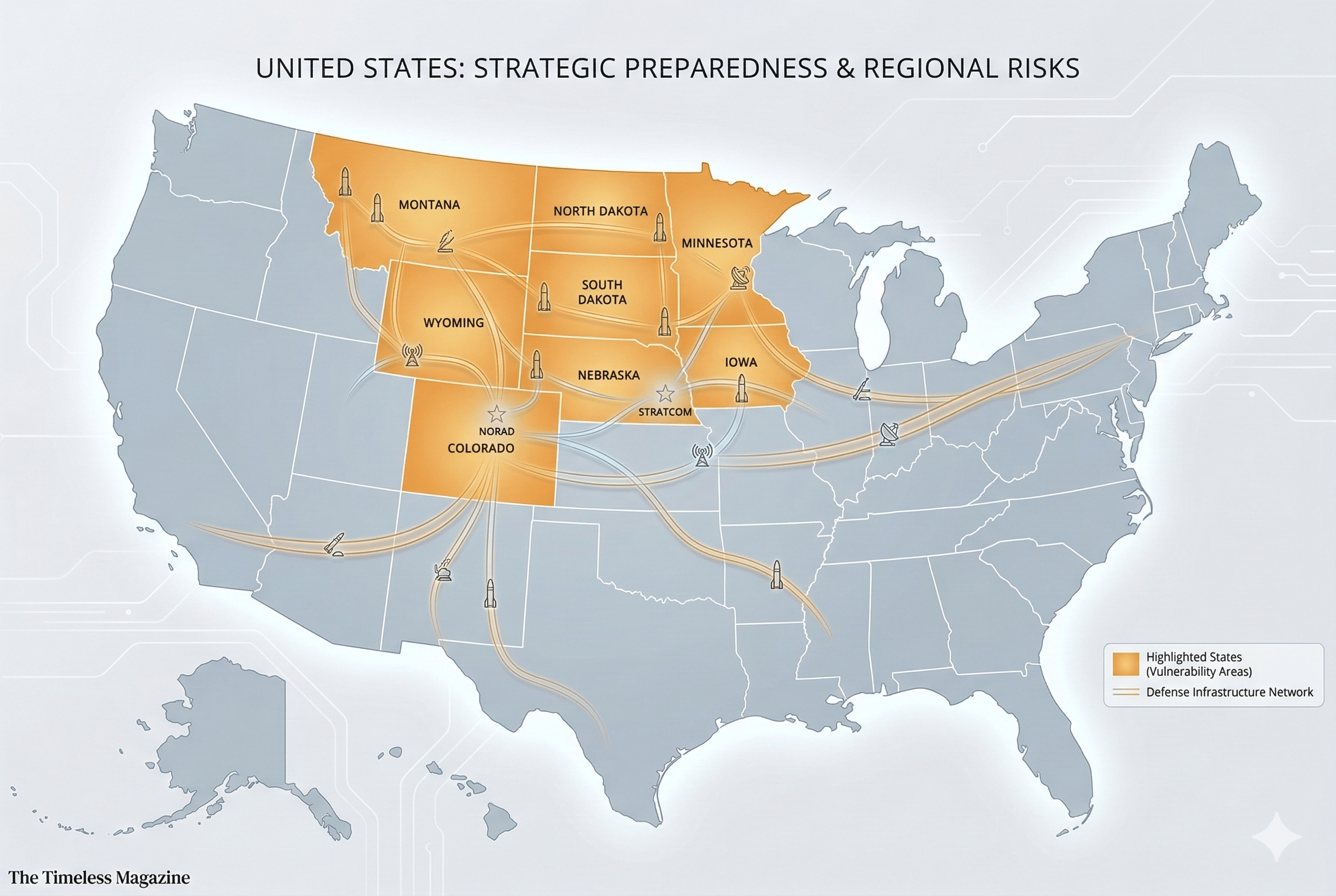
States near U.S. missile silos
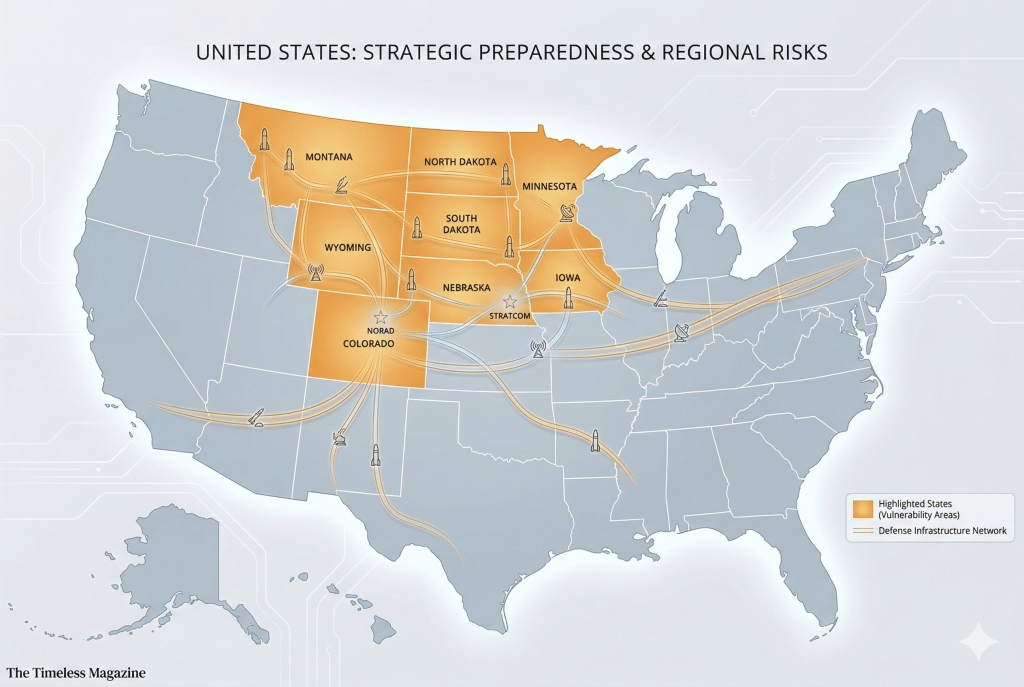
According to research discussed by Newsweek and other defense analyses, several states in the central United States host key parts of the country’s land-based nuclear deterrent.
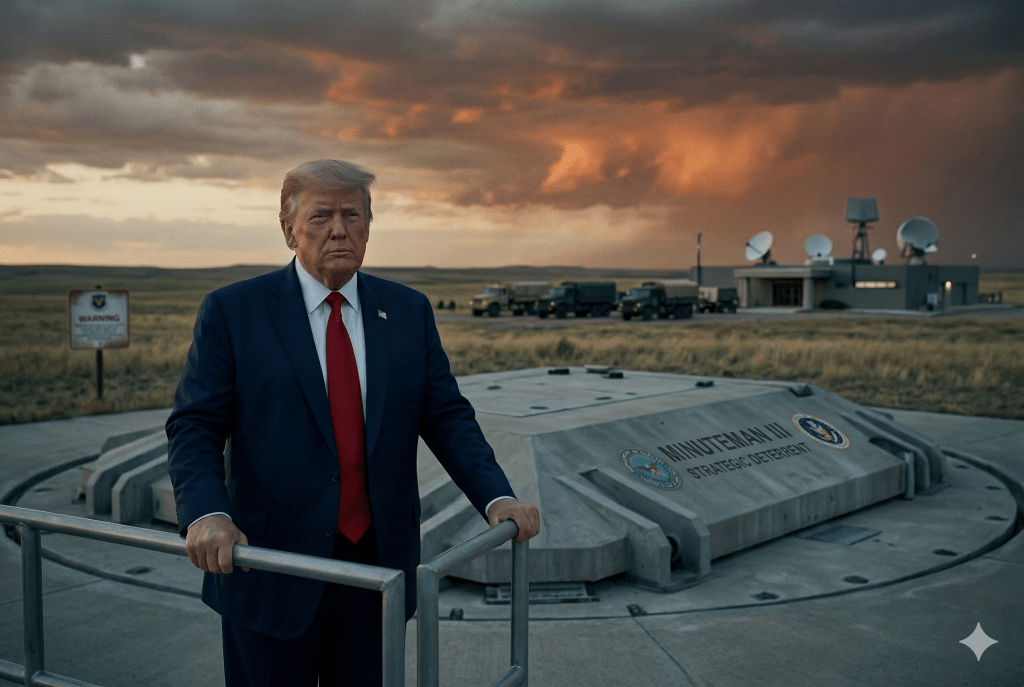
The U.S. maintains hundreds of intercontinental ballistic missiles (ICBMs) in underground silos across parts of the Midwest and Great Plains. These missiles form one part of the U.S. “nuclear triad,” alongside submarine-launched missiles and strategic bombers.
Because enemy forces might attempt to neutralize those weapons early in a conflict, areas near the silos could theoretically become priority targets.
The states most often mentioned in this context include:
• Montana
• Wyoming
• Colorado
• Nebraska
• South Dakota
• North Dakota
• Iowa
• Minnesota
Many of these regions contain missile fields connected to major U.S. Air Force bases that control ICBM systems.
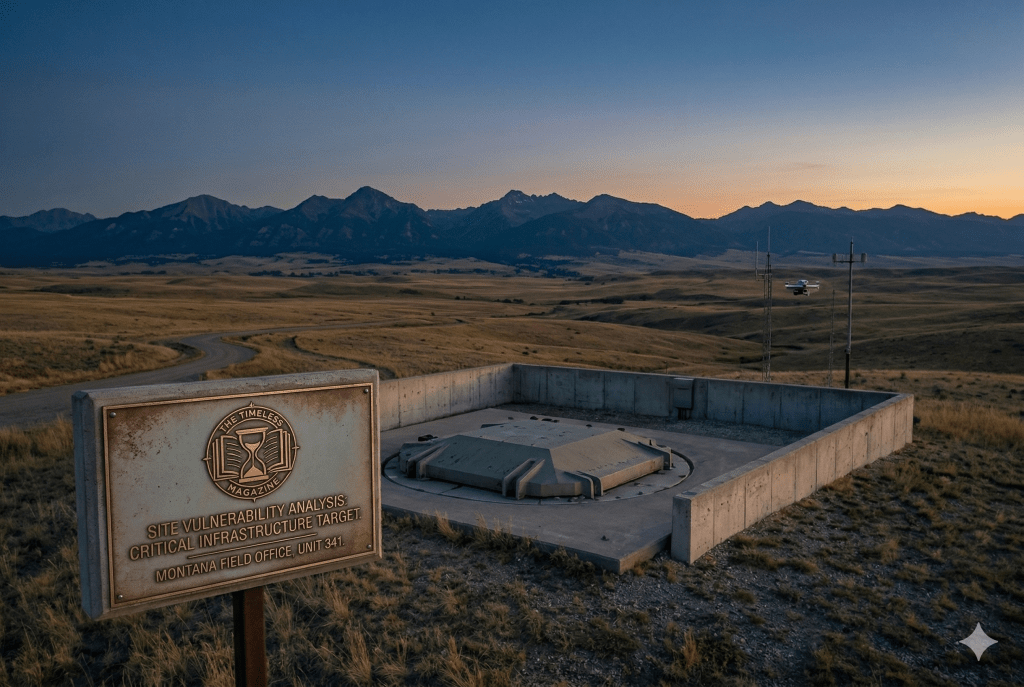
For example, Montana hosts missile fields linked to Malmstrom Air Force Base, while North Dakota operates similar facilities connected to Minot Air Force Base.
In a theoretical nuclear exchange, military planners believe that destroying these launch systems could become a high priority for adversaries attempting to limit the United States’ ability to retaliate.
Areas sometimes considered less immediate targets
Some analysts suggest that states without major strategic military installations might be less likely to be targeted during the earliest phase of a conflict.
Certain coastal and northeastern states — including Maine, Vermont, New Hampshire, Massachusetts, Rhode Island, Connecticut, and parts of the Southeast — are sometimes cited in strategic discussions as having fewer immediate nuclear targets compared with regions containing missile silos or large strategic bases.
However, experts caution that this does not mean those areas would be safe.
Major cities, transportation hubs, energy infrastructure, and ports could still become targets in any large-scale conflict.
No place is truly safe in nuclear war
According to defense experts, more than 12,000 nuclear warheads still exist worldwide, held primarily by countries such as the United States and Russia, with smaller arsenals maintained by several other nations.
Because of the devastating power of modern nuclear weapons, even regions far from military targets could be affected by fallout, economic collapse, and global disruption.
For that reason, analysts repeatedly emphasize that geography alone would not guarantee protection.
In the event of a full-scale nuclear conflict, specialists agree on one sobering conclusion: no location on Earth could be considered completely safe.